
At UplinkRobotics, in partnership with the 9H Research Foundation, we believe in mentoring the next generation of engineers through hands-on, impactful projects. In 2026, interns Muhammad Mujahid Iqbal and Lily Trujillo took on the challenge of building a long-range video transmission system for our inspection crawlers, gaining real-world experience in RF engineering, embedded systems, and PCB design while building the technical skills and confidence that will carry them into their future careers.

The 9H Research Foundation is a game-changing non-profit organization dedicated to bridging the gap between classroom theory and real-world application. Through its partnership with UplinkRobotics and its longstanding investment in University of Wyoming programs, the Foundation gives students the chance to contribute to real products at the earliest, most formative stage of their careers. Their commitment to hands-on learning has been instrumental in making our 2026 internship program possible, providing not just financial support but also mentorship, resources, and a network of industry connections that have elevated our interns’ experiences to unprecedented levels.
Ready to learn more about the organization that’s changing the game for University of Wyoming students?
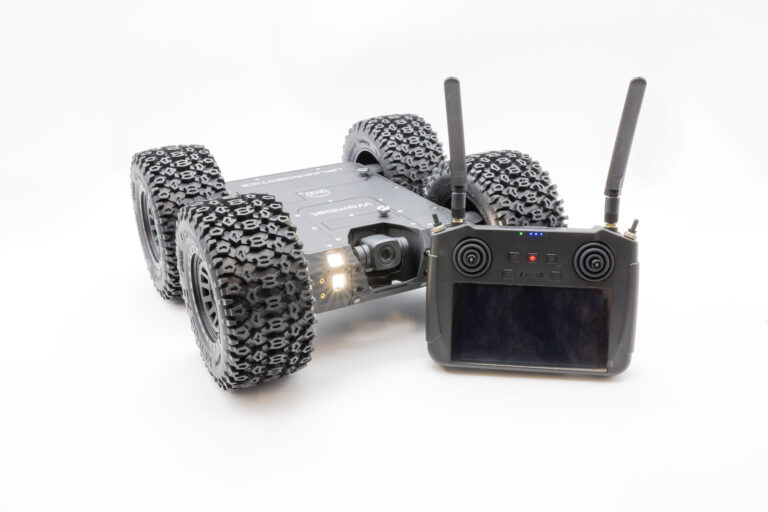
Across Wyoming and beyond, the infrastructure communities depend on most sits in places people can barely reach: culverts, industrial pipes, storage tanks, confined spaces full of hazards. Inspecting these spaces the traditional way means shutting a system down, digging it up, or sending someone in. An inspection crawler solves this by going in so a person doesn’t have to. But it’s only as useful as its connection back to the operator, since a lagging feed or unresponsive controls make the robot useless right when it matters most. Muhammad and Lily’s internship centered on building that connection in-house, rather than buying it off the shelf.
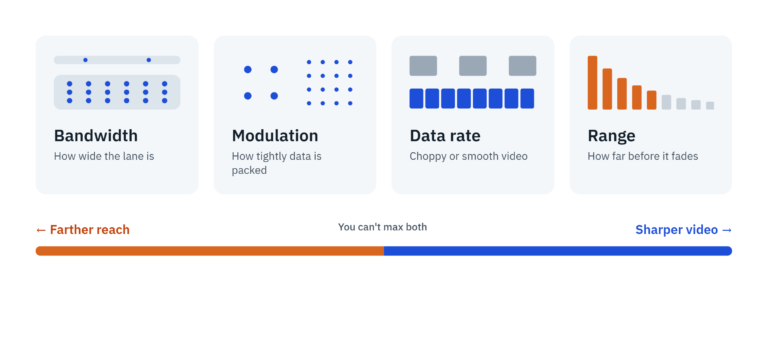
Before choosing a single part, the interns had to work through the physics governing how a video signal travels through the air. Range and bandwidth pull against each other: a signal that reaches farther typically carries less information per second, which is what determines whether the video looks smooth or choppy, and there’s no single right answer, only the best balance for a given job. A crawler working its way down a long, straight culvert has very different needs than one navigating tight corners in a cluttered industrial space. This module was a disciplined comparison of candidate hardware against those trade-offs: reach, picture quality, and resistance to interference.
With the research settled, Muhammad and Lily assembled a working system, connecting a camera to custom controller boards so live video could travel from the robot back to the operator’s handheld controller. The build added telemetry, a steady stream of battery, temperature, humidity, and pressure data sent back alongside the video, so an operator can catch a problem before it becomes a failure deep inside a pipe. They also made the link two-way, adding joysticks, buttons, switches, and potentiometers to the controller, then verified the system on an actual robot: driving it, toggling its lights, and running through every function expected of a standard remote controller.
A system that works on a bench hasn’t proven anything yet. Muhammad and Lily took the crawler outdoors and tested it at increasing distances to find exactly where performance broke down, tracking the point where the picture softened, then stuttered, then dropped altogether. They compared hardware combinations and operating modes against each other, including a high-quality mode built for a sharper picture at shorter range against a long-range mode that trades some sharpness for reach, and testing methodically, rather than trusting a single run, is what let them identify the combination that delivers the most usable range for real inspection work.
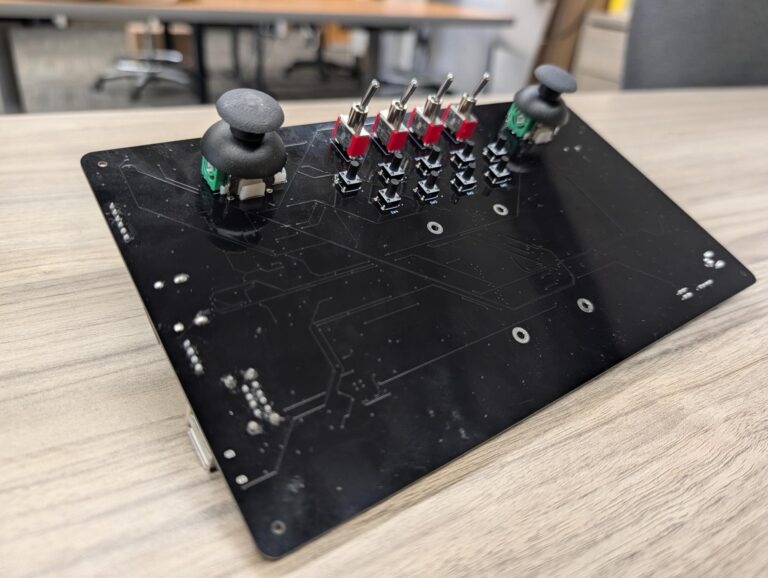
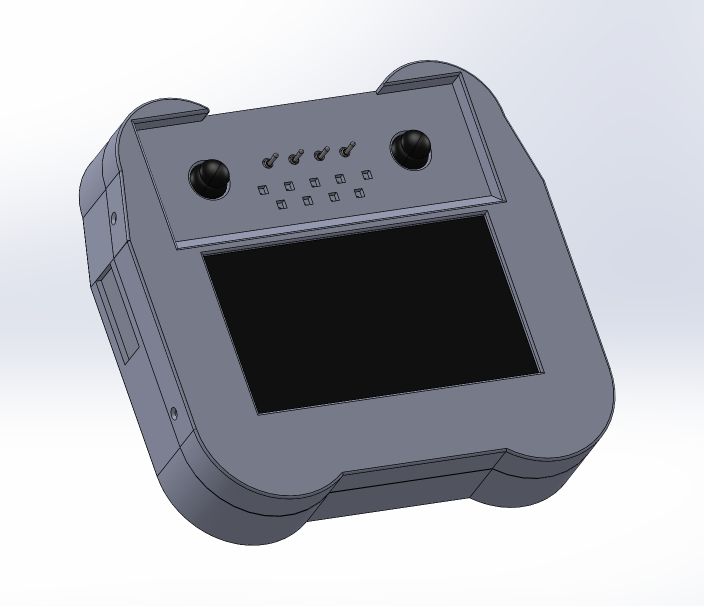
Beyond the RF work, Muhammad and Lily built an on-screen display from the ground up: software that overlays telemetry, driving mode, and a timestamp directly onto the live video feed, so an operator never has to look away from what the robot sees. They closed out the internship by designing a printed circuit board for the controller, replacing a bench prototype’s tangle of wires with a single rigid board. Because the board carries high-speed video and data signals, this meant controlled-impedance design and multi-layer construction so every signal arrives clean, turning a working prototype into a professional, production-ready controller.
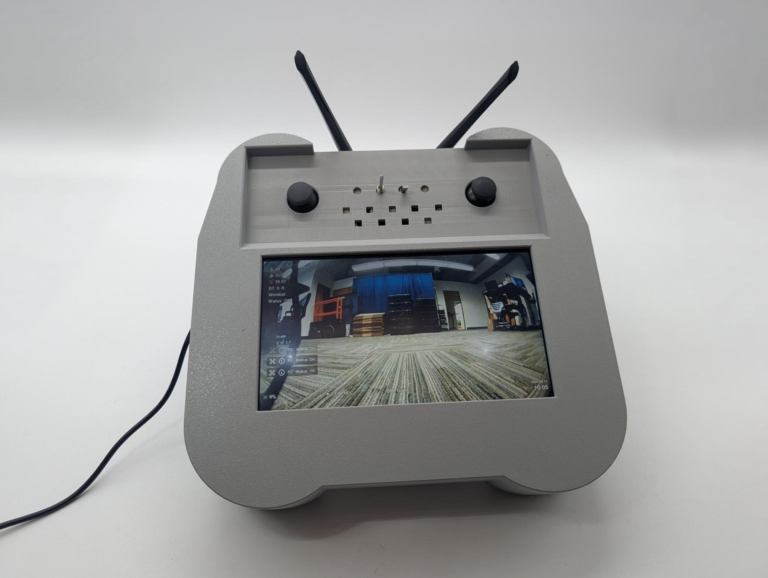
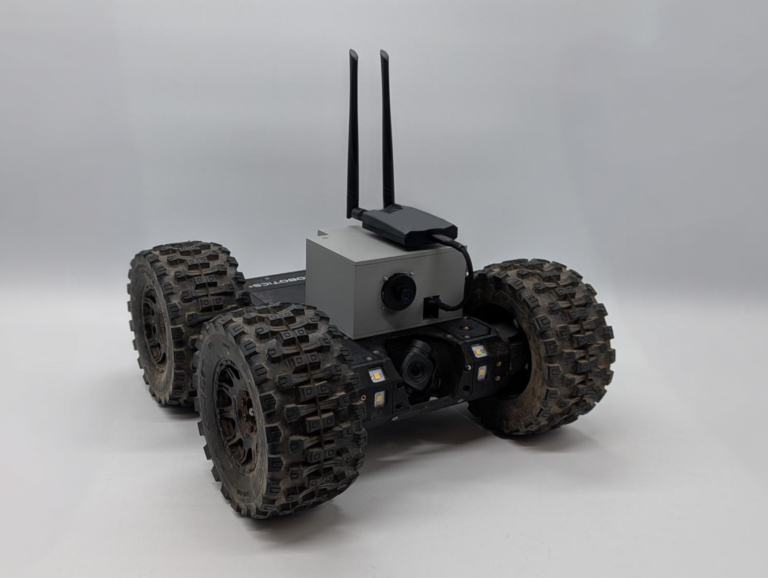
With a validated long-range video and control system and a prototype controller board, the next step is moving this system from prototype into the field on more of our crawler platforms. Continued range testing across the varied environments our customers work in will help refine it further, building toward an in-house video and control platform UplinkRobotics can keep improving as customer needs evolve.